Search Engine Marketing: What It Is & How to Do It 2026
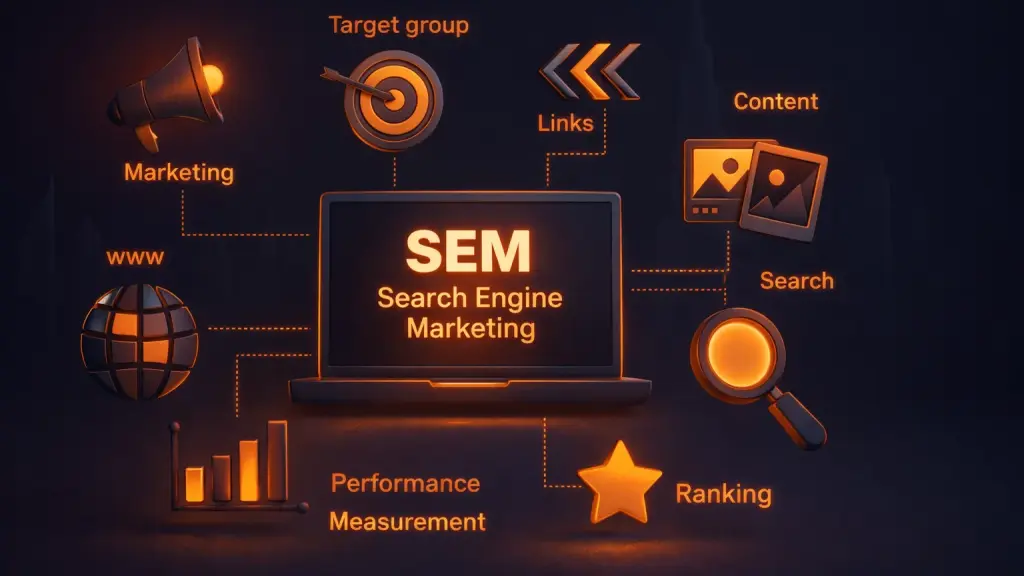
Search Engine Marketing: A lot of companies were unprepared for how quickly search behavior shifted. Searching is still a must for decision-making, but people now want results quickly and with minimal fuss. Companies continue to rely on search engines for important results, as evidenced by the fact that worldwide spending on search ads surpassed $300 billion in 2024.
Google also found that the majority of online purchases start with a search, which proves one obvious fact. The most powerful indicator of purpose in the modern day is search.
Critical for a rapidly expanding Digital Marketing Agency in the UAE like C2C Media, this change is of the utmost importance. Customers now want more than just analytics on their website traffic and presence. Direct results, sales, leads, and calls, demonstrating the ROI of marketing budgets are what they seek.
Compared to other channels, search marketing is the best at meeting this need since it reaches customers while they are actively seeking solutions. Curiosity is not its strong suit. A need that is already there gets met by it.
In the year 2026, search is about more than just clicks and ranks. In search engine optimization, knowing your audience’s motivations, expectations, and trust-building timeliness are crucial. A lot of people pay attention to and take action on brands that respect this intent. Ignoring it will result in obscurity, regardless of how much money you have.
What Is Search Engine Marketing?
Search Engine Marketing (SEM) refers to paid advertisements shown within search engine results pages. These ads appear when users type intent-driven queries related to products or services. The goal is simple. Place your brand in front of people who are ready to act, not just explore options.
Unlike social or display ads, search ads do not interrupt the user journey. They support it. A user asks a question, and your brand appears as a possible answer. This alignment between question and response is why search often produces stronger conversion rates than other paid channels.
SEM also offers clear control. You decide when ads show, where they appear, and how much you spend. This makes search a reliable channel for businesses that need predictable results. For service-based companies, local brands, and ecommerce stores, this control often becomes the backbone of lead generation.
Get a Custom Search Engine Marketing Plan for Your Business?
Work with our specialists to build campaigns that drive measurable ROI.
SEM vs SEO in 2026: Knowing the Difference
Numerous firm proprietors continue to inquire What is SEO Marketing and its comparison to paid search. The distinction hinges on timing, exertion, and visible management. SEM ensures instant positioning at the apex of search results. SEO emphasizes acquiring organic visibility by enhancing content quality and relevance.
The Different Types of SEO Marketing encompass on-page enhancements, technical adjustments, content development, and authority establishment. These endeavors require time but generate enduring benefit. Search Engine Marketing yields expedited outcomes but necessitates continuous investment to sustain visibility.
In 2026, prominent brands refrain from favoring one option over another. They employ paid search to seize quick demand as SEO cultivates trust and authority concurrently. Collaborative efforts enhance overall search performance. Compensated data informs organic strategy, while SEO enhances landing page quality for advertisements.
How Search Marketing Has Evolved Over the Years?
The term “keyword bidding” no longer adequately describes the scope of search marketing. In earlier campaigns, the emphasis was placed on specific keywords and standard text advertisements. Before displaying advertisements, search engines today take into consideration a user’s intent, behavior, location, device kind, and timing.
When it comes to managing bids and placements on a large scale, automation plays a more significant role. However, success cannot be guaranteed just through the use of automation. Approaches to structure, message, and targeting are still guided by strategy. Whenever there is a lack of clear guidance, automatic systems quickly waste budget.
Additionally, search has grown outside the scope of traditional engines. Platforms such as YouTube, Amazon, and Bing have an impact on purchasing decisions at various phases of the acquisition process. It is becoming increasingly common for users to interact with search results through the use of voice search and AI-driven responses.
Brands that have a comprehensive understanding of the search environment are able to maintain their visibility in the decision-making process.
Core Components of Search Engine Marketing
Why Topical Authority Matters More?
Paid ads form the foundation of search marketing. These ads appear above or alongside organic results and target users with clear intent. Platforms such as Google Ads and Microsoft Ads allow advertisers to reach users actively searching for solutions.
Campaign structure matters here. Well-organized ad groups improve relevance and reduce costs. Clear targeting ensures ads appear only for searches that align with business goals.
Keyword Research That Matches Intent
Keyword research is not about chasing volume. It is about understanding intent. High-intent keywords signal readiness to buy or contact. Research keywords reflect early-stage interest and need careful handling.
Negative keywords play a critical role by blocking irrelevant searches. This improves efficiency and protects budgets. Grouping keywords by intent also improves ad relevance and landing page alignment.
Ad Copy and Extensions That Build Trust
Ad copy should match the user’s search closely. Clear headlines, honest promises, and simple calls to action perform best. Avoid exaggeration. Users want clarity, not noise.
Ad extensions add trust by showing contact details, locations, or additional offers. These small details often decide whether a user clicks your ad or scrolls past.
How Search Engine Marketing Works Step by Step in 2026?
Every strong search campaign begins with clear goals. These goals might include lead generation, phone calls, online sales, or store visits. Without defined goals, optimization becomes guesswork. Keyword selection follows next. Keywords should reflect real user intent, not just popularity. Ads are then written to match each keyword group closely, improving relevance and lowering costs.
Landing pages play a critical role after the click. Pages should load quickly, explain value clearly, and make action simple. Confusing pages waste even the best ad traffic. Budget and bidding strategies come next. Advertisers can choose between manual control and automated bidding. Automation saves time, but regular review ensures alignment with business goals.
Finally, campaigns require ongoing testing and tracking. Search marketing is not a one-time setup. Continuous improvement keeps performance strong and costs under control.
Search Engine Marketing Strategies That Work in 2026
Intention, rather than reach, is the primary focus of successful strategies. When compared to big volumes of traffic with little purpose, fewer high-quality queries typically perform better. When AI bidding is led by clean data and defined objectives, it functions at its most effective.
The significance of first-party data has increased as a result of improvements in privacy. Through the use of audience layering, targeting can be refined while still adhering to compliance rules. Since mobile searches are expected to continue to rise, local search advertising is also performing well.
Common Search Engine Marketing Mistakes to Avoid
Many businesses waste budget by targeting broad keywords without intent. Others forget to update negative keywords, allowing irrelevant clicks to drain spend. Poor landing page experience also hurts results. Even strong ads fail when pages confuse users. Focusing only on clicks instead of conversions leads to misleading success metrics.
Ignoring search term reports removes valuable insights that could improve targeting. Avoiding these mistakes saves money and improves long-term results in UAE.
Essential SEM Tools You Need in 2026
Essential Search Engine Optimization Tools That You Will Need in 2026
The correct tools are essential to the success of any campaign. Placements and bidding are managed by Google Ads and Microsoft Ads respectively. The behavior of users and conversions are monitored by analytics tools.
Opportunities that are based on intent are revealed by keyword planners. The way in which users engage with landing pages can be visualized using heatmaps and conversion tools. Although artificial intelligence techniques can help with insights, human judgment is still necessary.
How to Determine the Success of Search Engine Marketing?
It is necessary to concentrate on useful measurements in order to measure performance. According to the click-through rate and cost per click, advertisements are relevant. It is the alignment of keywords, advertisements, and landing pages that determines the quality score.
The genuine performance may be seen in the conversion rate and the cost per lead. Long-term impact can be evaluated with the help of return on advertising spend and lifetime value. It is rare for impressions to communicate the whole narrative on their own.
How SEO Connects With Search Marketing in 2026?
SEO supports paid search in powerful ways. SEO Marketing Activities improve landing page quality, which strengthens ad performance. A clear SEO Marketing Strategy also reveals keyword trends that paid campaigns can test quickly.
Understanding Why is SEO Important helps brands treat search as a connected system. Staying aligned with Google Algorithm Updates ensures compliance and stability. Changes like the Meta Andromeda Update also influence how platforms prioritize content and ads.
New concepts such as Answer Engine Optimisation shape how users receive information. AI summaries and voice answers rely on clear, helpful content. Traditional Search Engine Optimisation still matters, but it now supports broader search experiences.
The Future of SEO Marketing focuses on clarity, trust, and usefulness. SEO Marketing in 2026 will reward brands that answer real questions honestly. Businesses must also plan budgets around Average SEO Marketing Cost shifts as competition increases.
Is Search Engine Marketing Right for Your Business?
Search works best for businesses with clear offerings and defined goals. Service providers, ecommerce brands, and local companies benefit most. Budgets should align with expected returns, not assumptions.
When paired with Social Media Marketing Strategies and well-structured Digital Marketing Packages, search becomes even more effective. Brands that adapt to Top Digital Marketing Trends stay competitive.
Final Thoughts
Search remains one of the most reliable growth channels available today. It connects brands with people who are already ready to act. While tools and platforms change, intent remains constant.
For brands working with C2C Media, search marketing is not just about ads. It is about timing, trust, and understanding people. When done right, search delivers results that matter today and well into the future.
Ready to Grow Faster with High-Performance Search Engine Marketing?
Stop wasting and spend our SEM experts build data-driven campaigns that deliver qualified traffic, higher conversions, and measurable ROI in 2026.