

Schema Markup for SEO: Beginner’s Guide

Search engines are no longer searching. They are interpreting that single shift explains why so many businesses feel invisible despite “doing SEO correctly”. They publish content, optimize pages, and still struggle to gain consistent visibility. The issue is rarely effort. It is understanding.

Schema markup exists because search engines cannot rely on inference alone. They need clarity. They need structure. They need confirmation. In competitive markets like Dubai, where thousands of businesses communicate similar messages using similar language, schema markup becomes less of a technical enhancement and more of a strategic necessity.
This guide is written for beginners, but it is not simplified. It is written from the perspective of practitioners who have seen how structured data affects visibility, trust, and long-term performance in the UAE market. A serious SEO agency in Dubai for businesses does not treat schema as optional, because the cost of being misunderstood in search is far greater than the cost of implementation.
Knowing Schema Markup Beyond Definitions
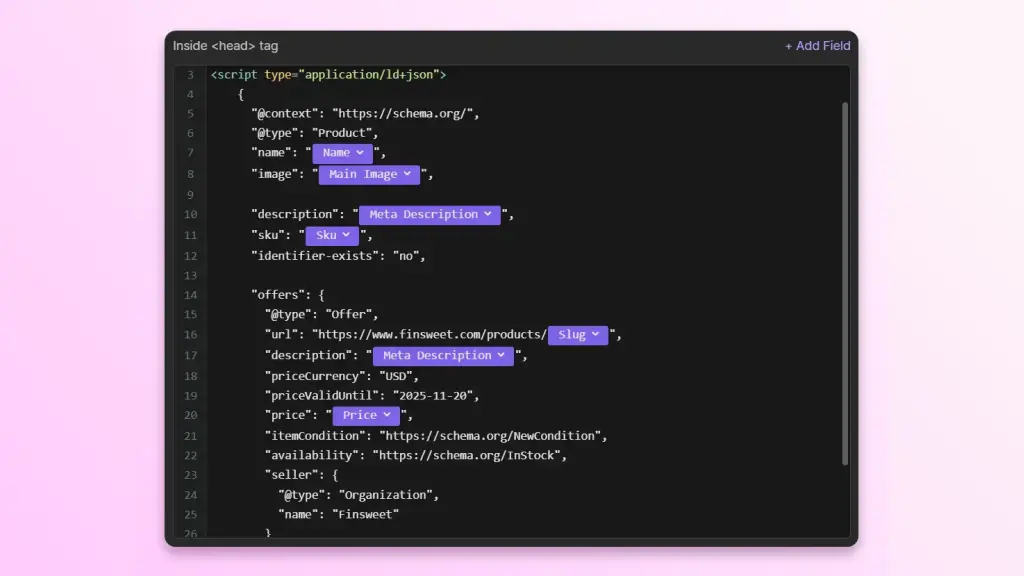
Schema markup is often described as structured data added to a website’s code. While correct, this explanation barely scratches the surface. In practice, schema markup is a method of declaring meaning.
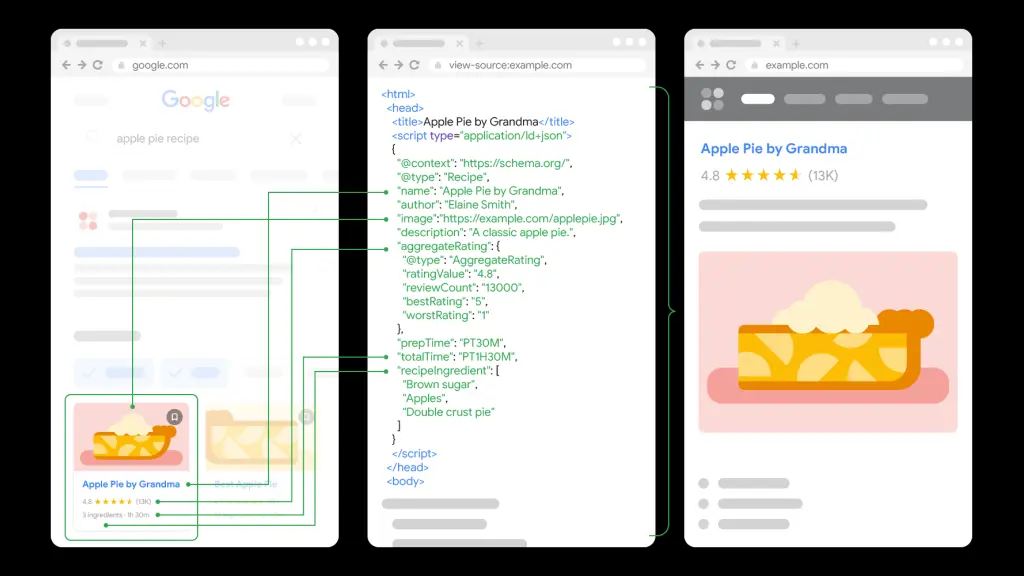
When a business describes itself as a service provider, schema clarifies whether that description refers to an organisation, a local business, a brand, or a professional service. When content references a location, schema helps define whether that location is operational, contextual, or incidental.
Search engines cannot safely assume intent. They must verify it. Schema markup reduces that uncertainty.
For a Digital marketing Company UAE, this distinction matters because ambiguity weakens trust. Two websites may offer identical services, but the one that communicates structure and intent clearly is easier for search systems to interpret consistently.
Google itself explains that structured data helps its systems better understand content and present it more effectively in search results. This is not a ranking promise; it is a comprehension statement. When understanding improves, misclassification decreases.
Why Has Schema Become More Important in Recent Years?
Search engines today rely heavily on entity-based systems. They build relationships between businesses, services, locations, and topics. This evolution means that SEO is no longer about pages alone. It is about how those pages connect to a broader knowledge framework. Schema markup feeds that framework.
As of recent years, Google processes billions of searches daily, and more than 92% of the UAE population actively uses the internet, according to Statista. In such a saturated environment, search systems cannot rely on surface-level signals. They prioritise clarity, consistency, and verification.
This is why businesses working with a performance marketing agency in Dubai often see schema as part of conversion optimisation rather than just technical SEO. When search engines interpret a business accurately, they present it more confidently.
Schema Markup and Trust Signals in the Dubai Market
Dubai’s digital landscape is unforgiving. Users compare options quickly and expect professionalism from the first interaction. Trust is not built through claims alone. It is built through consistency across signals.
Schema markup supports trust by reinforcing factual accuracy. Business details, service associations, and location relevance are all communicated explicitly rather than implied.
Search Engine Land reports that pages eligible for enhanced search features often experience stronger engagement, with some studies indicating up to 3.5 times higher click-through potential when presentation improves. This does not happen automatically. It happens when structure supports content.
For businesses competing locally, this clarity can influence which result a user chooses to click.
How Schema Aligns With AI-Driven Search Systems?
Search engines increasingly rely on machine learning models to interpret context. These systems do not “read” content emotionally. They evaluate patterns, relationships, and structure.
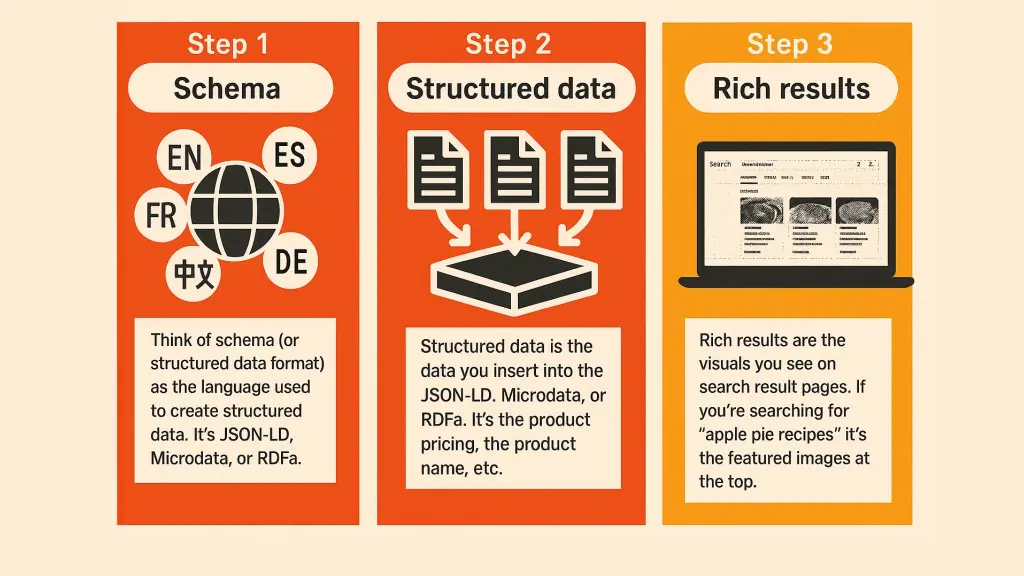
This is where AI-driven SEO UAE strategies depend heavily on schema markup. Structured data provides labelled context that machines can process reliably. Without it, AI systems must infer meaning, which increases the risk of misinterpretation.
McKinsey has highlighted that AI systems perform more effectively when data is clearly structured and labelled. In SEO terms, this means schema markup improves how machines associate businesses with services, industries, and locations.
Schema does not future-proof a website by itself. But without it, future-proofing becomes far more difficult.
Schema as Infrastructure, Not Optimisation
One of the most damaging misconceptions beginners hold is that schema is an optimisation tactic. It is not. Schema is infrastructure. It supports everything built on top of it.
Just as poor site architecture weakens even the best content, unclear structured data weakens even the strongest messaging. This is why a seasoned SEO agency in Dubai for businesses revisits schema whenever a business evolves.
New services, new locations, rebranding, or expansion into Abu Dhabi all require schema updates. Outdated structured data creates contradictions. Search engines notice those contradictions long before users do.
Local Search Behaviour and Schema in Dubai and Abu Dhabi
Local intent dominates many UAE searches. Users are often looking for immediate solutions rather than information alone. This is where a strong local SEO strategy Dubai benefits significantly from schema.
Schema reinforces geographic relevance by clarifying operational locations and service areas. It does not replace local SEO. It strengthens it.
Businesses that also operate in Abu Dhabi often struggle with overlapping signals. Schema helps search engines understand geographic scope without confusion, provided it aligns with on-page content.
For companies supported by a Digital marketing Company UAE, this clarity ensures that local campaigns do not contradict organic signals.
Schema, Branding, and Perceived Authority
Authority is not declared; it is recognised. Schema plays a subtle role in this recognition by helping search engines associate content with a verified entity.
When a brand’s messaging, visual identity, and content structure are consistent, often refined with the support of one of the best Branding and designing agency in dubai, schema reinforces that consistency at a machine-readable level.
This alignment reduces friction between brand intent and algorithmic interpretation. Over time, this contributes to stronger entity recognition, which is increasingly important in competitive search environments.
Why Beginners Struggle With Schema Implementation
Most schema mistakes stem from misunderstanding purpose, not from technical incompetence. Beginners often expect immediate ranking improvements and become disappointed when none appear.
Common issues include using schema types that do not match content intent, applying structured data without supporting content, or leaving schema unchanged as the business evolves. Schema does not compensate for weak content. It amplifies clarity when substance already exists. A professional SEO agency in Dubai for businesses treats schema as part of a system, not a shortcut.
Schema’s Role in Long-Term SEO Stability
Algorithm updates are inevitable. Businesses that rely on surface-level tactics often experience volatility. Those that invest in clarity experience stability. Schema contributes to stability by reinforcing truthful, structured signals. Clear entities are less likely to be misinterpreted. Trusted signals are less likely to be disrupted.
With UAE digital advertising spend exceeding AED 12.6 billion, according to Statista, competition for attention continues to intensify. Organic visibility that relies on clarity rather than manipulation becomes increasingly valuable.
Why Schema Matters Even When Users Never See It
One of the most overlooked aspects of schema is that users rarely interact with it directly. Its impact is indirect but persistent. Schema influences how content is classified, how businesses are grouped, and how relevance is determined. Over time, this affects visibility, presentation, and perceived authority. Search systems reward consistency. Schema supports consistency at scale.
A Practical Perspective on Schema for Beginners
Beginners should not approach schema as a technical hurdle. It should be approached as a communication tool. The question is not “What schema should I add?” but “What do I want search engines to understand clearly?” When schema reflects reality, it strengthens trust. When it exaggerates or misrepresents, it weakens it.
Conclusion
Schema markup will never be exciting. It will never generate instant traffic spikes. It will never replace content, branding, or strategy. What it does is far more important. It reduces misunderstanding.
In markets like Dubai, where competition is intense and user patience is limited, being misunderstood is costly. Schema helps ensure that what a business is aligns with how it is interpreted.
A performance marketing agency in Dubai can drive traffic. But without structured clarity, those efforts operate on unstable ground. Schema not only ensures success, but also supports it.
Businesses that treat schema as infrastructure rather than optimisation build resilience. They are less affected by algorithm shifts, less prone to misclassification, and better positioned for long-term growth. For beginners, understanding this mindset matters more than understanding code.
Schema markup is not about adding something new. It is about making what already exists easier to understand, that is why it works quietly, consistently, and over time, decisively.
Need help implementing schema markup correctly?
Contact our SEO experts and boost your website’s search visibility today.