
Dubai Startup SEO: How to Compete with Established Brands

Entering the online market as a startup in Dubai can feel like stepping into a busy intersection without clear directions. Established brands dominate search real estate, backed by years of content, recognition, and user behaviour signals that search engines rely on to determine relevance. Yet, visibility in search is not an exclusive club. It is a system of signals, some of which a small business can influence early, if strategically and consistently.

The objective for any startup is not simply to appear on the first page once. It is to build a trajectory of trust and relevance that aligns with how people in the UAE discover, evaluate, and choose solutions online. Understanding these patterns, and how search engines interpret them, is key to competing with long-standing competitors.
The Digital Landscape in the UAE Is Uniquely Competitive
Dubai’s population is digitally connected and highly engaged. The UAE’s internet penetration is exceptionally high at 99% of the total population, putting it among the most connected countries globally and making the digital channel a primary arena for business visibility and customer acquisition.
This connectivity translates into intense competition for visibility: both organic and paid. Users research online habits deeply before engaging with a brand. If a startup’s online presence fails to communicate clarity, users often default to brands they already recognise.
What complicates this further is how varied the online touchpoints have become. Search engines remain central, but social media platforms, maps, reviews, and mobile search all influence perception and decision patterns.
Statistics that reflect global search behaviour also apply to Dubai in principle. Search engines are processing vast volumes of queries daily. Globally, search engines handle an estimated 8.5 billion search queries per day, a sign of how central search still is for discovery and decision-making.
The Nature of Search Competition for Startups vs Established Brands:
Established brands have a catalogue of signals that start-ups lack:
- Long histories of indexed content
- Repeated user engagements
- External mentions and references
- People search for brand directly
These signals help search engines recognise them as authoritative in their categories. Startups do not have this luxury, but they have something equally potent: focus.
Startups can:
- Publish with clear intent
- Structure content for specific questions
- Target meaningful user actions rather than broad rankings
This approach removes the need to beat competitors at their own game and instead positions the startup where established brands have left room for relevance.
How Search Engines Evaluate New Businesses?
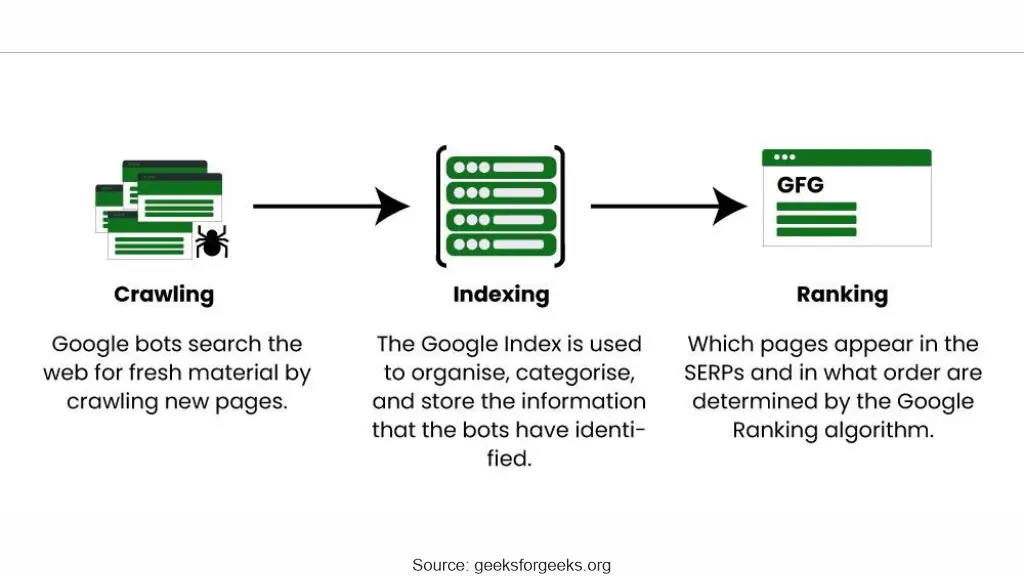
Search engines like Google do not label businesses as “new” or “old.” They look for patterns in relevance, user satisfaction, and contextual value.
When authority signals are limited, relevance signals take precedence. If a page answers a specific user query clearly and efficiently, it stands a chance of ranking even against bigger sites.
This is particularly vital for startups because it means that immediately trying to compete on broad, highly competitive terms is often inefficient. Instead, success often begins with relevance around specific user needs that larger brands may overlook or treat too generically.
Consistency also plays a role in recognition. A startup that publishes repeatedly around a coherent set of topics helps search engines build a more reliable theme around the business.
Many founders engage professional help early to build this foundational strength, often seeking Search Marketing Experts UAE to align visibility strategy with user behaviour from day one.
Content Strategy: Depth and Relevance Over Volume
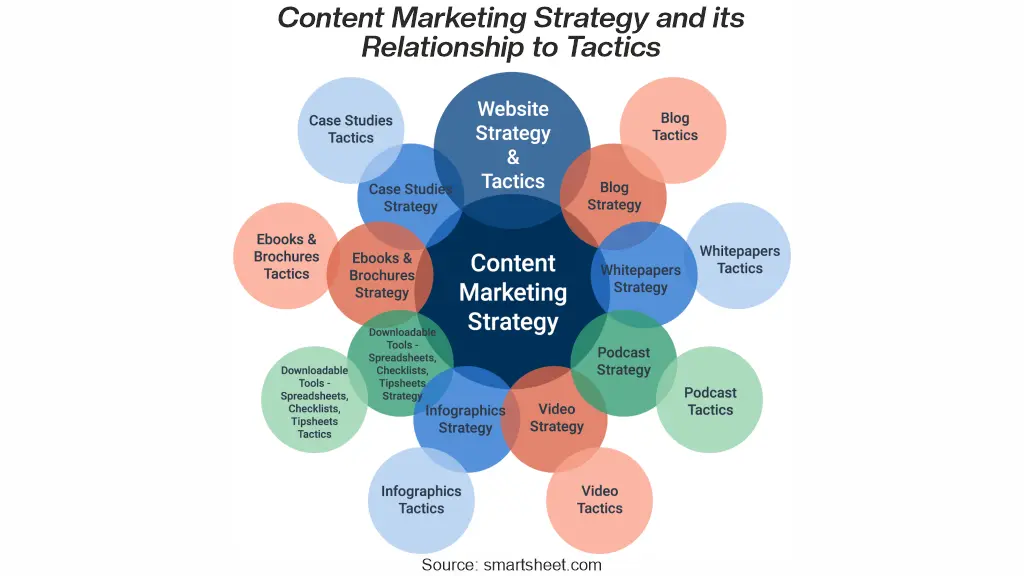
Content is not just words on a page. It is how a brand proves competence, clarity, and usefulness.
Established brands often publish frequently. But frequency without focus yields content that is broad and shallow. Startups can compete by being deep, explaining, contextualising, and addressing questions users actually care about. Rather than shorter template articles, deep, problem-solving content helps:
- Engage readers
- Reduce bounce rates
- Increase time spent on page
- Support broader visibility over time
These patterns are exactly what search engines reward when authority signals are not yet fully established.
Why detailed content supports early visibility?
Content that delves into specifics provides richer signals to search engines about intent and context. It also increases the chances of matching nuanced queries, especially in markets like Dubai where users compare options before converting.
Over time, this strategy does not just accumulate pages; it builds thematic relevance that search engines recognise as authority.
Grow Your Dubai Startup with Proven SEO Strategies
Outrank established brands and drive sustainable organic growth with startup-focused SEO.
Strategic Keyword Approach for Startups:
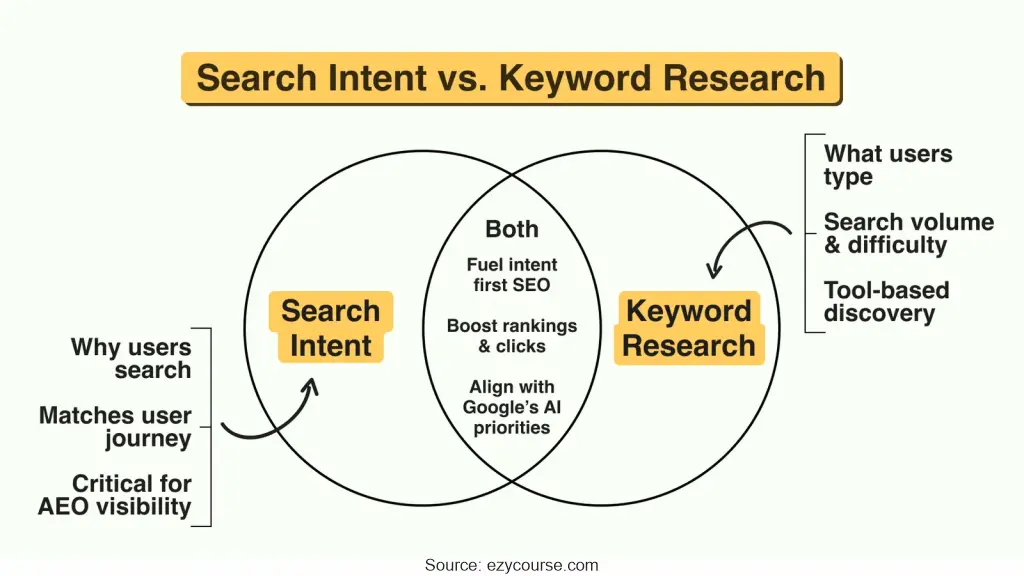
Startups often make one of the most common mistakes early on: trying to target broad, high-competition terms that established brands already occupy. Instead, startups should:
- Identify long-tail queries with specific user intent
- Avoid direct competition on head terms early
- Focus on query clusters around user problems
This approach allows startups to build visibility through meaningful engagement rather than superficial ranking.
For example, a startup may avoid broad terms that already include global brands and instead focus on queries that local users are more likely to use when close to making a decision.
These decisions are based on intent, not volume. High search volume does not guarantee impact if intent does not align with what the startup offers.
Local Context Is More Than a Modifier, It’s a Signal:
Even when location is not explicitly searched, Dubai users make implicit assumptions about relevance through context. People want to know:
- Is this business local?
- Does it understand local needs?
- Can it be delivered in my region?
In the UAE, local visibility matters because well-connected users evaluate options across platforms before engaging.
Recent local data highlights this behaviour: a significant majority of UAE consumers search for local businesses frequently, with 80% searching at least weekly and 32% doing so daily. This behaviour emphasises that any startup competing in Dubai must align with local search behaviour and local expectations.
Working with a Digital Marketing Agency In Dubai that understands how local audiences interpret clues, tone, context, examples, service positioning, provides an important edge for relevance.
Website Structure as an Startup SEO Asset:
The way a startup’s website is organised affects how quickly relevance is recognised. Search engines need to understand a site’s purpose early, and simple, clean structures help. Content should be logically grouped, navigation should be intuitive, and internal links should guide readers clearly.
-
Design influences user trust and engagement early:
Users decide whether to stay or leave within seconds. A professional layout, clear branding, and easy navigation communicate trust before content is even consumed.
This is why many startups engage a Website Design Company in Dubai early, to ensure usability and search-friendly structures are in place from the start.
SEO Support Through Paid Strategies and Performance Marketing
SEO should not operate in a vacuum. Organic visibility strengthens other channels. Users who recognise a brand organically often engage differently with paid messages, familiar names appear more credible, and this influences engagement rates. This synergy especially matters for startups investing in Performance Marketing Services to support acquisition while SEO gradually builds relevance.
Startup SEO works like a long-term asset. It supports familiarity and continuity that paid campaigns alone cannot sustain once budgets pause. Search engines increasingly use behavioural signals, such as repeat visits and engagement, to interpret relevance. When SEO and paid campaigns align, these signals compound more efficiently.
Read More : A Beginner’s Guide to Performance MarketingEnhanced Focus on Mobile and Local Behaviour
Mobile search behaviour dominates many markets, and Dubai is no exception. According to digital trends in the UAE, mobile search usage remains intensely high, with users spending significant time online each day across devices.
This mobile dependency amplifies the importance of mobile-first SEO design, responsive content, and local signals. Startups must ensure their content and structure cater to mobile user expectations, fast, clear, and actionable.
When users search on mobile, the intent often leans toward more immediate consideration, learning, comparing, or finding a local solution. Startups that align content with these moments improve the signalling that search engines interpret for relevance.
Internal Linking That Strengthens Context
As content grows, interlinking becomes more important. Internal links help search engines build connections between related topics and understand hierarchy. For startups, this means defining core topics early, linking supporting content to these core pages, and creating a logical network that mirrors user thought paths
Supporting content pathways boost thematic relevance
When users follow logical links through the site, from a problem query to a solution page, engagement patterns improve. These patterns matter for how search engines interpret relevance and context depth.
This internal structure also reinforces content clusters, themes that search engines recognise as authority frameworks.
Measuring SEO Progress Accurately
Many startups abandon Startup SEO too soon because they expect immediate ranking gains. In reality, visibility builds over time. Metrics that matter more than ranking positions include:
- Impressions across related searches
- Engagement depth (time on content, scroll behaviour)
- Repeat visits and brand queries
- Organic traffic growth over time
These metrics reflect deeper relevance and behavioural trust, which search engines prioritise.
Global SEO data supports the value of organic search as the main traffic driver, with organic search responsible for about 53% of all website traffic in recent research.
Why Startup SEO Often Struggles?
Startup SEO rarely fails dramatically; it fades when strategy is misaligned. Common issues include:
- Chasing high-competition keywords too early
- Publishing without clear intent or depth
- Ignoring local user behaviour
- Treating SEO as a checklist rather than a growth system
Search engines reward clarity, consistency, and contextual usefulness, not shortcuts.
How C2C Media Approaches Dubai Startup SEO Differently?
At C2C Media, SEO is treated as a systematic growth framework, not a ranking tactic. The focus is on:
- Understanding user behaviour deeply
- Aligning content with real questions users ask
- Structuring websites for early relevance
- Integrating startup SEO with broader acquisition channels
Strategic clarity trumps scale
Startups do not need to outspend established brands. They need to out-focus them, positioning content where real intent aligns. This allows new businesses to build trust, relevance, and visibility even in highly competitive environments like Dubai.
Competing With Established Brands Is a Long Game
Startups are not expected to dominate overnight. The real objective is to build an upward trajectory, one where relevance signals grow, engagement deepens, and visibility expands.
By prioritizing clarity, contextual relevance, and user-centered content, startups can gradually earn meaningful visibility. Over time, this visibility supports trust, engagement, and sustainable growth in one of the region’s most demanding digital markets.
Let’s Build a Winning SEO Strategy for Your Start-up
Tell us about your business, we’ll help you create an SEO roadmap that outperforms big-brand competitors.